
Behaviour in EYFS
Behaviour at Britannia
At Britannia, we believe that positive behaviour is the foundation for learning, wellbeing and life beyond school. Our Behaviour Policy is underpinned by a Therapeutic Thinking approach, which recognises that behaviour is a form of communication and that children do their best when they feel safe, understood and supported. We focus on building strong relationships, teaching emotional regulation and maintaining clear, high expectations, so that all pupils can develop the skills they need to make positive choices. Guided by our Four Rs – being Respectful, Responsible, Resilient and Reflective – we work consistently and compassionately with pupils and families to create a calm, inclusive and nurturing environment where everyone can thrive.
Our Valued Behaviours – The Four Rs
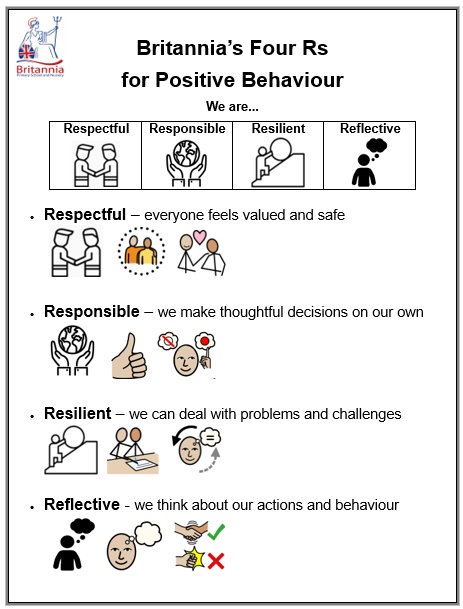
Our behaviour expectations are built around our Four Rs. These valued behaviours help children understand how to treat others, make positive choices and take responsibility for their actions. The Four Rs are taught, modelled and celebrated every day and provide a shared language that supports emotional development, positive relationships and learning.
To make sure the Four Rs are meaningful for all children, we use age‑appropriate visual posters across the school. These reflect the same core values but are carefully worded so that expectations are clear and accessible at each stage of a child’s development.
Rewards and Consequences – Our Therapeutic Thinking Approach
At Britannia, our approach to behaviour is guided by Therapeutic Thinking, which recognises that behaviour is a form of communication. We focus on understanding, teaching and supporting children to make positive choices, while maintaining clear and consistent boundaries.
Rewards and Recognition
- Immediate praise and encouragement for showing the Four Rs
- Stickers, certificates and stamps to celebrate valued behaviours
- Responsibility Points
- Spotlight Pupil awards to recognise positive role models
- Positive behaviours shared with parents and carers, including phone calls home
- Recognition is specific, genuine and supportive, helping children feel valued and confident
Managing Detrimental Behaviour
- Calm reminders and clear warnings to support reflection and self‑regulation
- Logical, proportionate consequences that are linked to the behaviour
- Therapeutic and restorative conversations to help children understand what went wrong and how to put things right
- Consideration of underlying needs or unmet skills, alongside maintaining high expectations
- Behaviour is logged if concerns persist, with parents involved early
- Additional tailored support (such as achievement cards or the graduated approach) where needed
- Serious or unsafe behaviour is managed promptly by senior staff to keep everyone safe
Our aim is always to help children feel safe, understood and supported, so they can learn from their behaviour, build positive relationships and develop the skills they need for life.
Policies
Our Behaviour Policy and Anti-Bullying Policy can be found on our Policies website page, by clicking the link below.


The Zones of Regulation
In EYFS we use the Zones of Regulation to support pupils to identify their feelings and be able to express how they are feeling, using their developing oracy skills.

Parent Information
In Nursery and Reception, we use the ‘Zones of Regulation’ to promote positive behaviour management. All staff have received training on the theory and practice of this.
What are the Zones of Regulation?
The zones of regulation teach children to identify and manage their emotions. It is designed so children can foster self-regulation and emotional control.
What is Self-Regulation?
How about self-regulation is the ability to use our thinking brains so we can stop and think before we act.
Why use the Zones of Regulation?
To teach children how to:
· Identify their feelings
· Be aware of what zone they are in
· Start to use tools to be in the appropriate zone for the moment
What are the Bears?
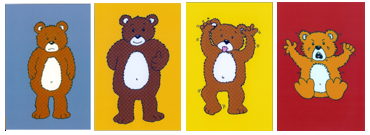
The bears help children to identify the way they are feeling.
What are the Zones?
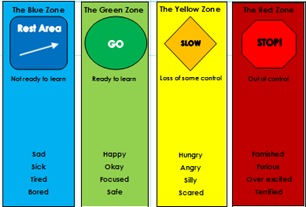
The children are taught to identify different feelings and the zones like in the examples below.
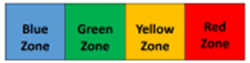
Blue - my thinking brain feels slow and sluggish (e.g. tired / unwell)
Green - I can use my thinking brain to learn and problem solve (e.g. happy, well, safe)
Yellow - I can use my thinking brain but it's difficult to listen to it (e.g. excited, worried, angry)
Red - I can't use my thinking brain, I'm just reacting (e.g. over-excited, terrified, furious)
What are the Tools?
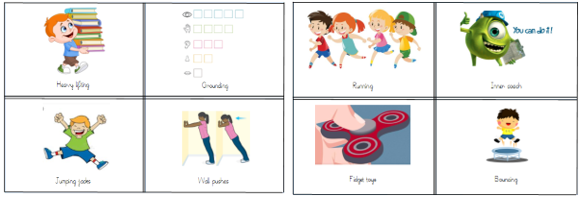
The tools teach children different ways to help them get back into the green zone.
Things to Know
Every zone is a good zone and appropriate at different times. E.g. it is ok to feel angry and this is normal, for example if someone has taken a toy off you.
It is important that adults identify their own feelings in front of the children e.g. I am frustrated, I am in the yellow zone.
Adults model what they do about it e.g. I am going for a walk, I need to get into the green zone.
Adults help the children by labelling the zone they are in throughout the day e.g. you look sleepy, you are in the blue zone.